Pelvic Floor Breathwork
— an introduction—
One of the best places to start with any pelvic floor or nervous system regulation strategy is the breath. Let's create a slow and smooth breath, and guide the movement of the breath down to the belly and pelvic bowl.
A 10 minute audio practice — for sitting or lying down, no equipment needed.
Yes, let's breathe!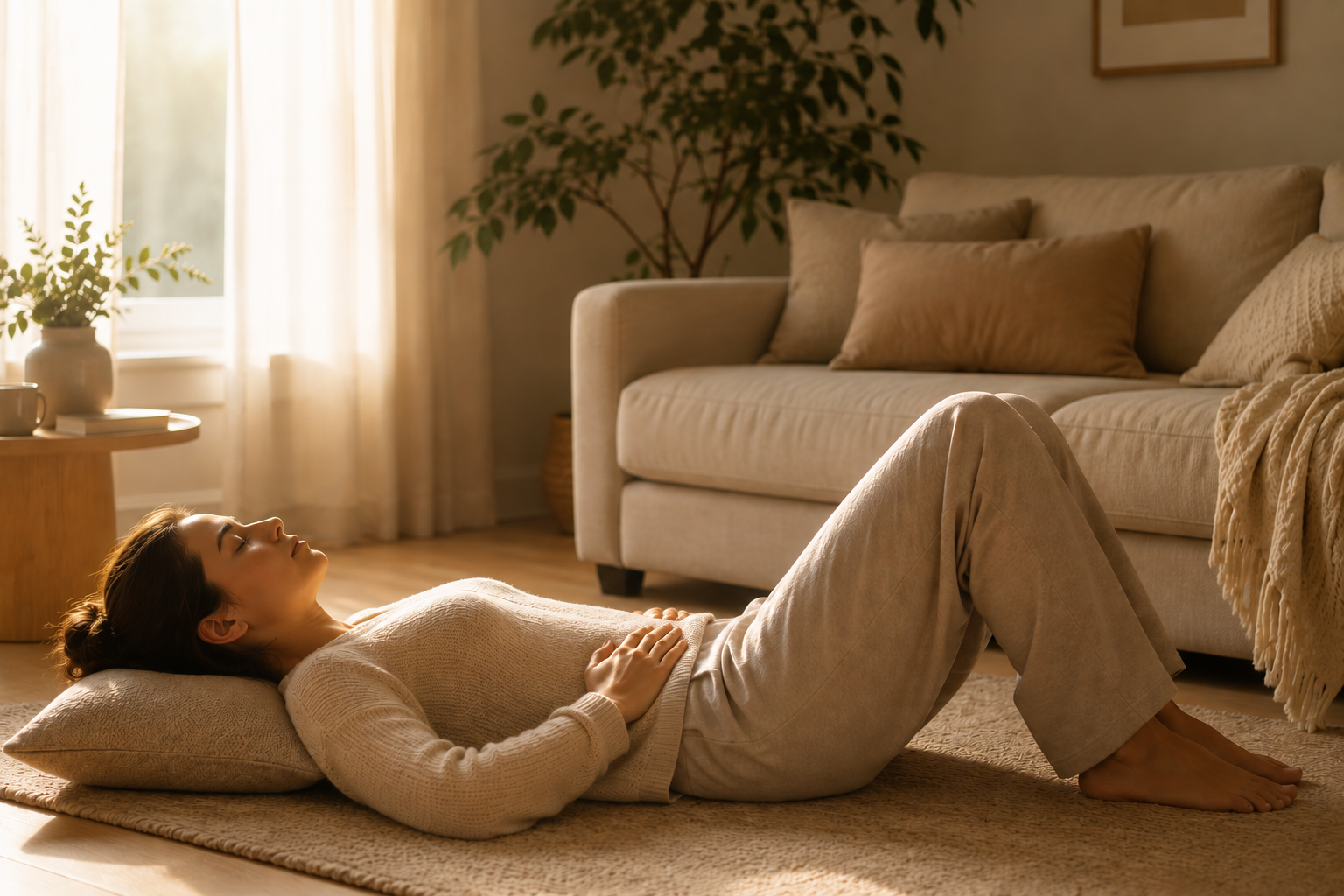
The coordination and pace of our breath has an enormous impact on our pelvic floor mobility. When our ribs and pelvis are stacked, our rib cage is mobile, and our diaphragm is descending well, it gives a beautiful movement massage to the pelvic floor. This can help to soften held tension, soothe pelvic floor cramping, and once you get the hang of it, can be remarkably effective after a few minutes of practice.
01
Softens tension
02
Soothes pelvic floor cramping
03
Calms the nervous system
Our brain is also very interested in oxygen (obviously), so it's very interested in the state of our breathing. Short, sharp and upper chest based breathing can inform our nervous system that we better stay on guard. Cue more tension and an immune system ready to go into overdrive.
Low and slow breathing can help us move into our relaxation 'rest and digest' response. And we all know we definitely want more of that.
So let's slow and smooth the breath, focusing on bringing the movement of your breath down into the lower half of the torso and down into the pelvic bowl.
A 10 minute guided audio
Guided by Felicity, pelvic health physiotherapist and yoga teacher.
Pelvic Floor Breathwork — a taster
0:00 / 0:00
A short taste of the practice — the full 10-minute audio arrives in your inbox when you sign up below.
Take a breath with me
Sent straight to your inbox.